


The best walking route and shopping strategy for exploring the Spice Bazaar from Sirkeci without feeling overwhelmed involves taking the ten-minute downhill walk along Ebusuud Street toward Eminonu Square, entering through the southern arched gateway, focusing on inner-hall spice and dried fruit vendors, and sampling items systematically before agreeing on bulk purchases. Starting early around 09:00 allows you to navigate the sensory L-shaped market before midday tour groups arrive. This guided approach ensures you experience authentic merchant hospitality while easily selecting high-quality culinary ingredients to take home.
Ten-Minute Downhill Walk From Ebusuud Street to Eminonu
Reaching the Spice Bazaar from Ebusuud Street requires a gentle ten-minute walk downhill past local Sirkeci bakeries and tram tracks toward Eminonu Square. As you step out of your accommodation onto Ebusuud Street, turn northwest toward Muradiye Street or follow the gentle slope past Sirkeci Station along Hamidiye Street. The total distance is under 800 meters, taking roughly eight to ten minutes on foot depending on your pace along the stone-paved walkways. Along this brief route, you pass historic 19th-century commercial buildings, small tea houses serving black tea in tulip-shaped glasses, and traditional copperware workshops displaying handmade coffee pots.
Navigating this historical peninsula neighborhood on foot is straightforward, but staying observant helps you avoid crowded tram platforms near the Gulhane stop. Pay attention to the gentle slope; walking down toward the waterfront is smooth, while returning requires an easy uphill stroll. If you plan your day with companions or children, staying in generous Family Rooms offers a comfortable base with quick access to these pedestrian-friendly pathways. Before setting off, you can consult the Yasmak Sultan Hotel team at the front desk to grab a pocket street map or receive tailored walking tips for the surrounding Sirkeci alleys.
As you approach the lower end of Hamidiye Street, the massive stone arches of the New Mosque come into view, signaling that you have reached Eminonu. The Spice Bazaar, known locally as Mısır Çarşısı or the Egyptian Bazaar, sits directly adjacent to the mosque complex. Enter through the south gate, known as the Haseki Gate, where the scent of roasted coffee beans and crushed cardamom greets you at the threshold. Taking this direct walking line from Ebusuud Street bypasses traffic delays and places you right at the heart of Istanbul’s historic spice trade.
Navigating the Main Spice Stalls and Dried Fruit Traders
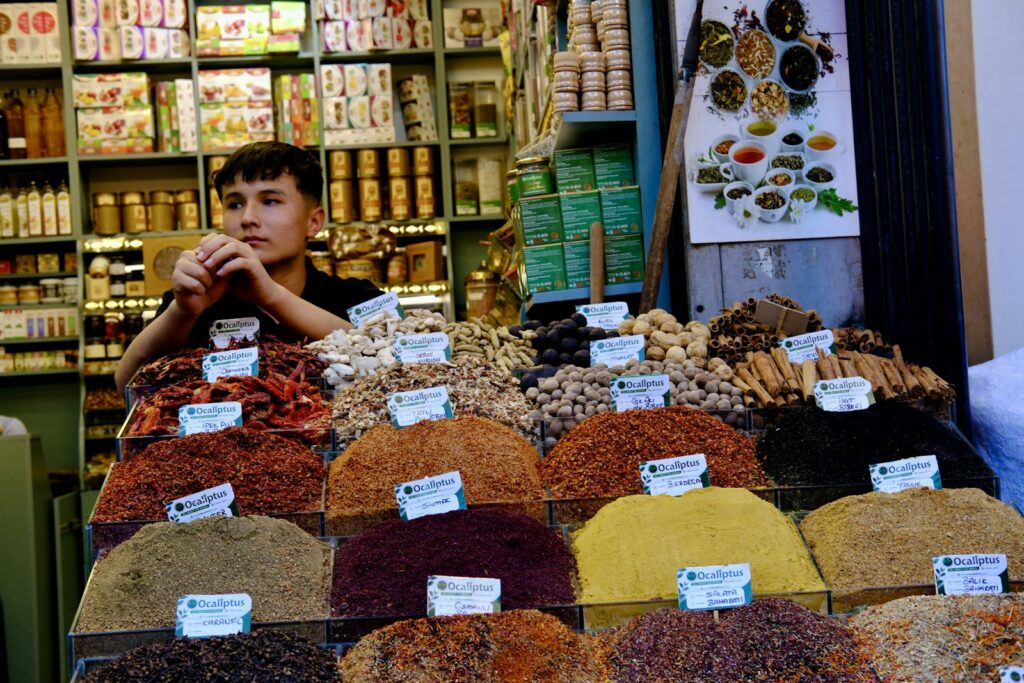
Navigating the main spice stalls inside the 17th-century L-shaped hall requires starting at the south entrance near Haseki Gate and browsing interior shops before exploring outer courtyard vendors. Built in 1660 as part of the New Mosque trust, the covered market houses roughly 85 interior shops arranged along two perpendicular covered halls. The main hall stretches nearly 150 meters, lined with vaulted ceilings painted in traditional motifs and stalls overflowing with colorful burlap sacks filled with crimson peppers, yellow turmeric, and golden chamomile blossoms.
To shop effectively without feeling rushed, follow a structured strategy. Begin by strolling the full length of the main corridor once to survey the displays and compare listed prices per kilogram before making any purchase. Merchant standard practice includes offering small samples of dried fruits, nuts, or Turkish delight on wooden trays; accept these graciously while comparing texture and aroma. Look for shops that display clear price signs in Turkish Lira and offer nitrogen-flushed or custom vacuum-sealing services, which keep ground spices fresh during your return flight.
When selecting dried fruits and nuts, focus on Anatolian specialties that highlight regional farming traditions. Malatya dried apricots come in two main varieties: bright orange sulfured apricots and naturally sun-dried dark brown apricots, which deliver a complex honeyed flavor. Aydin dried figs, roasted Antep pistachios, and soft pomegranate-infused Turkish delight stuffed with whole walnuts are exceptional choices. For traveler couples interested in combining historical exploration with boutique lodging nearby, exploring sister properties like Romance Istanbul Hotel offers insight into romantic accommodation options across the Historic Peninsula.
Outer courtyard stalls running along the western exterior street cater heavily to local home cooks and restaurant chefs. Here, prices can be slightly lower than inside the main covered arches, and vendors sell fresh cheeses, brined olives, cured beef pastırma, and loose herbal teas. If you prefer a quieter shopping pace, schedule your market visit between 08:30 and 10:00, when shopkeepers are setting up their displays, burning aromatic mastic gum, and offering their very first sales of the day.
Sourcing Fresh Spices for Your Turkish Cooking Class Experience
Sourcing fresh spices at the bazaar enhances your culinary skills when preparing classic Anatolian recipes under local chef guidance. When selecting culinary spices for authentic Turkish cooking, prioritizing freshness and raw aroma makes a dramatic difference in final dish flavor. Key pantry staples to seek out include pul biber (coarsely ground red pepper flakes with mild heat and rich seed oil), isot (sun-dried, fermented black pepper flakes from Urfa with a smoky raisin flavor), and sumac (tart, ground berries used to brighten grilled meats and onion salads).
When purchasing whole spices versus ground powders, choose whole coriander seeds, cumin seeds, and black peppercorns whenever practical. Whole spices retain their essential volatile oils for up to a year, allowing you to toast and grind them fresh in a mortar before cooking. Request that vendors grind whole cinnamon bark or sweet cloves right in front of you if you need fine powders. Be sure to ask vendors for advice on spice storage; keeping spices in airtight glass jars away from direct stove heat preserves their color and potency.
Putting these freshly sourced ingredients into practical practice creates an unforgettable sensory memory. You can join an interactive Cooking class in Turkish Cuisine to learn how local chefs balance pungent spices like dried mint in cold yogurt soups or knead fragrant cumin into traditional minced lamb köfte. Master techniques such as blooming pul biber in warm butter to finish lentil soup or marinating chicken skewers in olive oil infused with wild mountain oregano harvested from the Anatolian highlands.
Understanding these flavor profiles also allows you to experiment confidently in your home kitchen. Sumac, for instance, replaces lemon juice when seasoning sumac-rubbed red onions served alongside grilled meatballs. Isot adds a complex dark mahogany color and deep savory warmth to slow-simmered vegetable stews without scorching the palate. Taking home custom spice blends wrapped in airtight foil packages ensures your home cooking reflects genuine Istanbul market tradition long after your trip concludes.
| Spice / Specialty Item | Flavor Profile | Common Culinary Application | Selection Tip |
|---|---|---|---|
| Pul Biber (Aleppo Pepper) | Mildly spicy, oily, fruity | Eggplant stew, grilled meats, lentil soup finish | Choose oily, moist dark red flakes without added food dye. |
| Sumac Powder | Tangy, acidic, sharp citrus | Sumac onion salad, grilled kebabs, roasted legumes | Select deep crimson powder with a fragrant, fruity aroma. |
| Isot (Urfa Pepper) | Smoky, earthy, dried raisin warmth | Raw meat meatballs, slow lamb stew, roasted eggplant | Look for supple, moist purple-black flakes with rich oil contents. |
| Dried Malatya Apricots | Rich, naturally sweet, caramel notes | Lamb tagines, breakfast pastries, compotes | Select naturally dark brown, unsulfured organic varieties. |
Rooftop Evening Dining at Olive Anatolian After Bazaars
Concluding your market walk with a dinner at Olive Anatolian Restaurant brings your culinary journey full circle through elevated regional recipes and Historic Peninsula views. Located on the top floor of the hotel on Ebusuud Street, the restaurant overlooks the illuminated domes of Hagia Sophia, the Bosphorus Strait, and Topkapi Palace gardens. After spending hours navigating crowded market passages, taking an elevator up to this glass-enclosed dining space provides a relaxing transition from bustling streets to refined dining.
The culinary team crafts traditional Anatolian dishes using seasonal ingredients sourced directly from trusted regional producers. Menu highlights include slow-cooked lamb shank served over warm eggplant puree, wood-fired flatbreads, and sea bass cooked in salt crust. For diners with plant-based preferences, the kitchen prepares a dedicated menu with vegan and vegetarian options such as olive oil-braised artichoke bottoms, lentil patties, and stuffed vine leaves. Guests staying at the property also begin their morning here with a comprehensive breakfast buffet featuring fresh cheeses, olives, pastries, and honeycomb paired with panoramic landmark views. For direct reservations and full menu details, you can visit oliverestaurant.com directly.
Pairing your meal with local Anatolian wines curated from central and Aegean vineyards completes the dining experience. As dusk falls over Sirkeci, watching the ferry boats traverse the Bosphorus while enjoying traditional Turkish coffee and pistachio baklava offers a serene end to your historic market walk. The attentive service and cozy ambiance allow you to reflect on your day’s market discoveries while dining just steps from your hotel room door.
Exploring the historic spice trade routes from Ebusuud Street down to Eminonu opens a captivating window into Istanbul’s culinary heritage. With a clear walking route, smart shopping strategies, and an evening spent enjoying rooftop Anatolian cuisine, your time in Sirkeci will be rich in flavor, culture, and memorable moments.
Frequently Asked Questions
How long does it take to walk from Sirkeci to the Spice Bazaar?
Walking from Sirkeci along Ebusuud Street to the Spice Bazaar takes approximately ten minutes on foot down a gentle slope covering about 800 meters. The pedestrian route passes historical streetscapes and tram lines, leading directly to the southern entrance near Eminonu Square.
What are the best hours to visit the Spice Bazaar to avoid crowds?
The calmest hours to visit the Spice Bazaar are early in the morning between 08:30 and 10:00 or during the late afternoon after 17:00. Arriving early allows you to shop comfortably before large tour groups fill the central aisles.
Do merchants at the Spice Bazaar accept credit cards?
Yes, almost all major stalls inside the Spice Bazaar accept credit and debit cards alongside Turkish Lira. However, carrying small cash notes in local currency is helpful for small purchases or when buying fresh produce from outer courtyard vendors.
How can I safely transport spices and dried fruit back home on a flight?
Most vendors inside the market offer complimentary vacuum-sealing services that compress dried fruits and spices into airtight packages. Sealed packages prevent leaks, contain strong aromas, and comply with standard international airline carry-on and checked luggage guidelines.
Is bargaining expected inside the Spice Bazaar?
Moderate bargaining is customary when purchasing larger quantities of spices, dried fruits, or tea blends, but prices for small individual items are usually fixed. Asking politely for a small discount or an extra portion when buying multiple items is standard practice.
Where can I dine near the Spice Bazaar with views of Sultanahmet?
Olive Anatolian Restaurant, located on Ebusuud Street in Sirkeci, offers rooftop Anatolian dining with panoramic views of Hagia Sophia and the Bosphorus. The restaurant features classic regional specialties as well as dedicated vegan and vegetarian choices.
Can I combine a Spice Bazaar visit with a Turkish cooking class?
Yes, sourcing fresh spices at the market in the morning pairs perfectly with an afternoon cooking class in Turkish cuisine. Learning to use authentic Anatolian spices like sumac, pul biber, and isot elevates your understanding of local cooking techniques.
How close is the Spice Bazaar to nearby ferries at Eminonu?
The Spice Bazaar is located less than a three-minute walk from the main Eminonu ferry docks across the square. From Eminonu pier, you can easily board ferries traveling across the Bosphorus Strait to Asian shore neighborhood districts.