


When you step out onto the streets of Sultanahmet, you are not merely walking through a city; you are moving across centuries of imperial history. Every corner turn reveals stone walls, towering minarets, and grand domes that have weathered time. Yet, for many curious travelers, telling the difference between a 6th-century Byzantine sanctuary and a 16th-century Ottoman monument can feel like trying to decipher a forgotten dialect. Both empires built on a grand scale, and both shared a love for vaulted ceilings and commanding central domes.
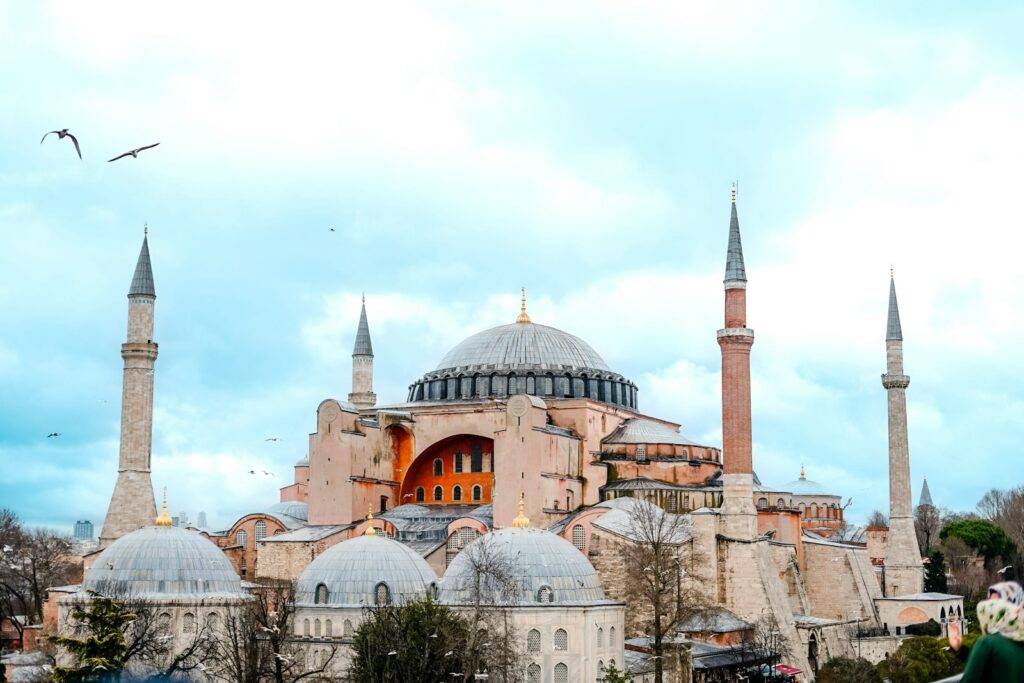
Once you know what to look for, the stones themselves begin to speak. By paying attention to building materials, arch shapes, and decorative elements, you can easily spot whether a building belongs to the Byzantine or Ottoman era. Here is your practical guide to reading the historic skyline of Istanbul as you explore the Old City on foot.
The Golden Domes and Mosaics of Byzantine Era
Byzantine architecture is defined by ingenuity born from resourcefulness and spiritual symbolism. When the Roman Empire moved its eastern capital to Constantinople, builders brought Roman engineering techniques and adapted them to construct vast indoor spaces intended to evoke the heavenly realm.
Here are the key features that reveal a Byzantine origin:
- Red Brick and Mortar Bands: Look closely at the exterior walls of older structures. Byzantine builders relied heavily on red clay bricks layered with thick beds of mortar. They often alternated courses of cut stone with multiple rows of brick, creating a distinct banded pattern on the exterior façade.
- Broad, Shallow Domes: Unlike the lifted, cascading domes of later centuries, Byzantine domes tend to sit lower on the building's silhouette. They are supported by clever structural transitions known as pendentives—triangular corner masonry that transfers the weight of a circular dome onto four massive square piers.
- Recessed Brick Work: Byzantine masons frequently placed bricks slightly back from the wall surface and covered them with mortar, giving the masonry a soft, weathered, and textured look.
- Subdued Exteriors, Radiant Interiors: A classic Byzantine ethos was to keep exteriors understated while transforming the interior into an ethereal experience. Gold leaf glass mosaics, green and purple marble columns brought from across the Mediterranean, and soft sunlight filtering through windows at the base of the dome are hallmark Byzantine interior signatures.
When you stand before Hagia Sophia or Hagia Irene, you see this design philosophy in action. The walls carry the warm tone of exposed brick and thick mortar, holding up immense floating domes that transformed world architecture forever.
Elegance in Stone: Iconic Ottoman Structures
When the Ottomans made Istanbul their imperial capital in 1453, they inherited these Byzantine masterpieces and developed a refined architectural language of their own. Ottoman architects perfected symmetry, balance, and verticality, turning stone masonry into an art form that reflected the reach and majesty of the empire.
As you wander through Sultanahmet, you can identify classical Ottoman architecture through these unmistakable details:
- Fine Ashlar Masonry: Ottoman builders preferred precisely cut light gray limestone blocks, known as ashlar stone. Unlike the exposed brick bands of the Byzantine era, classical Ottoman structures feature smooth, uniform stone surfaces fitted together with incredible precision.
- Pencil-Shaped Minarets: One of the easiest ways to identify an Ottoman complex is its minarets. They are slender, tall, and tapered like sharp pencils, often featuring delicate stone balconies supported by intricate stalactite carving.
- Pointed Arches and Muqarnas: While Byzantine builders favored rounded Roman arches, Ottoman architects introduced pointed arches above doors and windows. They also perfected muqarnas—three-dimensional geometric stalactite vaulting used to adorn doorway surrounds, column capitals, and ceiling transitions.
- Iznik Tile Panels: Instead of gold glass mosaics, classical Ottoman interiors feature breathtaking ceramic tiles produced in Iznik. Decorated with vibrant cobalt blue, turquoise, and tomato red floral motifs like tulips and carnations, these tiles illuminate interior spaces with natural warmth.
A prime example of this stone craftsmanship sits just a short walk from the main square. Visiting the historic Sultan Ahmet Tomb allows you to observe fine Ottoman marble work, hand-painted ceramic tiles, and intricate woodwork up close in a tranquil atmosphere.
Where the Two Majestic Empires Blend
Architectural history is rarely a matter of sharp lines and sudden breaks. Instead, it is a continuous conversation between eras. Great Ottoman master architects, most notably Mimar Sinan, studied Byzantine structural design deeply. They took the massive central dome concept pioneered in Hagia Sophia and elevated it, surrounding it with cascading half-domes, buttresses, and open courtyards to achieve unprecedented structural harmony.
In many Sultanahmet landmarks, you can see this blending firsthand:
- Reused Ancient Columns: Ottoman builders frequently incorporated antique marble columns from Byzantine ruins into new mosque courtyards and medreses—a practice known as spolia that seamlessly blended Roman marble with Ottoman design.
- Layered Interior Calligraphy: In converted Byzantine monuments, grand dark-and-gold Ottoman calligraphic discs hang alongside centuries-old brick arches, creating a unique visual dialogue between two imperial worldviews.
After spent hours looking up at dome arches and marble details, resting your feet becomes a priority. Having a central base makes all the difference when exploring on foot. Reserving a comfortable room among our comfortable room selection at Yasmak Sultan Hotel keeps you within easy walking distance of all these major sites, allowing you to explore at your own unhurried pace.
To top off a day of historical discovery, you can sample authentic regional cuisine at Olive Anatolian Restaurant on our rooftop terrace, enjoying local flavors while looking out over the very domes and minarets you spent the day exploring.
Continuing Your Historical Journey at Hotel Sultania
For travelers who find themselves captivated by the grandeur of the Ottoman era, the historical exploration does not have to end when you step inside your hotel. If you wish to immerse yourself deeper into the royal ambiance of the Ottoman court, our sister property Hotel Sultania offers thoughtfully designed spaces inspired by the stories and elegance of the sultans and their imperial household.
Choosing to stay on the Historic Peninsula places you at the very heart of Istanbul's story. If you are planning your itinerary and looking for an ideal 4-star stay in Istanbul’s historic center, having a warm, attentive local team to welcome you back after a long day of sightseeing ensures that your travel experience is smooth, relaxing, and deeply memorable.
As you explore Sultanahmet, take your time to pause before the ancient walls. Look at the texture of the stone, follow the line of the arches, and look up into the curve of the domes. The historic peninsula is an open-air library, and every building is ready to share its chapter of the city's story.
Photo: Nabil Adham — Unsplash